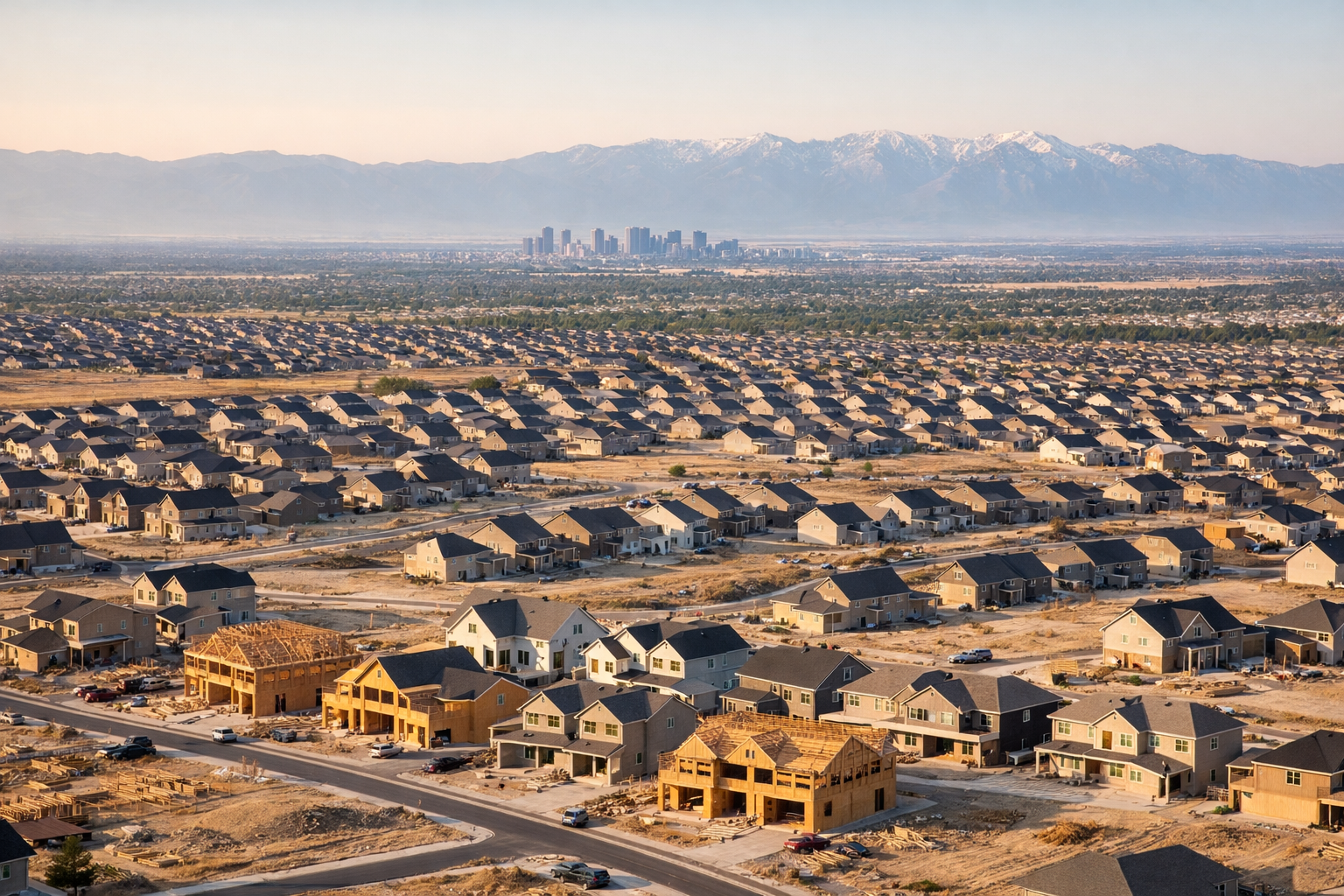
Utah’s housing shortage is structural. The state needs roughly 28,000 new homes annually for the next decade, yet half of Wasatch Valley renters already spend more than 30 percent of their income on housing. HB 306, the Utah Homes Act, was introduced to increase supply by allowing smaller “starter homes” and limiting municipal restrictions. It was a step in the right direction—but it wasn’t enough.
The problem lies in the legacy of exclusionary zoning. For decades, single‑family mandates have dominated Utah’s land use, reserving three‑quarters of residential space for detached homes. Originally designed to separate and exclude, these rules now function as barriers to affordability and sustainability. Detached homes with yards are not the default—they are a lifestyle preference. Treating them as untouchable policy is indulgence, not necessity.
Sprawl is costly. It demands car‑dependent infrastructure, drains urban tax bases, and fragments communities. Incremental reforms like HB 306 may ease restrictions on smaller lots, but they don’t address the structural imbalance. Utah cannot meet demand without rezoning to allow duplexes, townhomes, apartments, and mixed‑use development.
Salt Lake City, looking toward 2027, has a chance to lead. By embracing density and rethinking zoning, the city can preserve affordability, strengthen communities, and build sustainably. Single‑family housing will remain part of the mix, but it can no longer be the answer.
The call to action is clear: Utah must confront the legacy of exclusionary zoning and embrace rezoning as the path forward. If the state wants to keep the American dream alive, it must stop treating detached homes as the default and start building for the future.